How Dizzying Heights Captured the Spirit of the Lion City Jazz Festival
Some festivals announce themselves with noise. Others reveal themselves through intention.
The Lion City Jazz Festival belongs firmly in the second category. Its Dizzying Heights edition did not try to overwhelm audiences with scale or celebrity. Instead, it invited listeners into a carefully shaped experience where jazz could be encountered as a living, evolving art form.
Rather than positioning jazz as something to be consumed quickly, the festival framed it as something to be entered. Across performances, talks, and collaborative moments, Dizzying Heights became less about spectacle and more about ascent. Musical, creative, and human.
A Theme That Framed Listening, Not Just Programming
What made Dizzying Heights resonate was how thoroughly the theme was woven into the festival’s structure.
Inspired by the legacy and boundary pushing spirit associated with Dizzy Gillespie, the theme did not function as a branding hook. It functioned as a lens. Audiences encountered ideas of elevation, risk, playfulness, and virtuosity across multiple formats, from performances to conversations.
By the time listeners reached the main concerts, they were already primed to hear jazz not as a static tradition, but as something daring and alive. This sense of continuity is visible in how the programme unfolded, with each day building toward deeper engagement rather than dispersing attention:
Explore the festival schedule
Jazz That Felt Present, Not Preserved
One of the defining qualities of the Lion City Jazz Festival is its refusal to treat jazz as a museum piece.
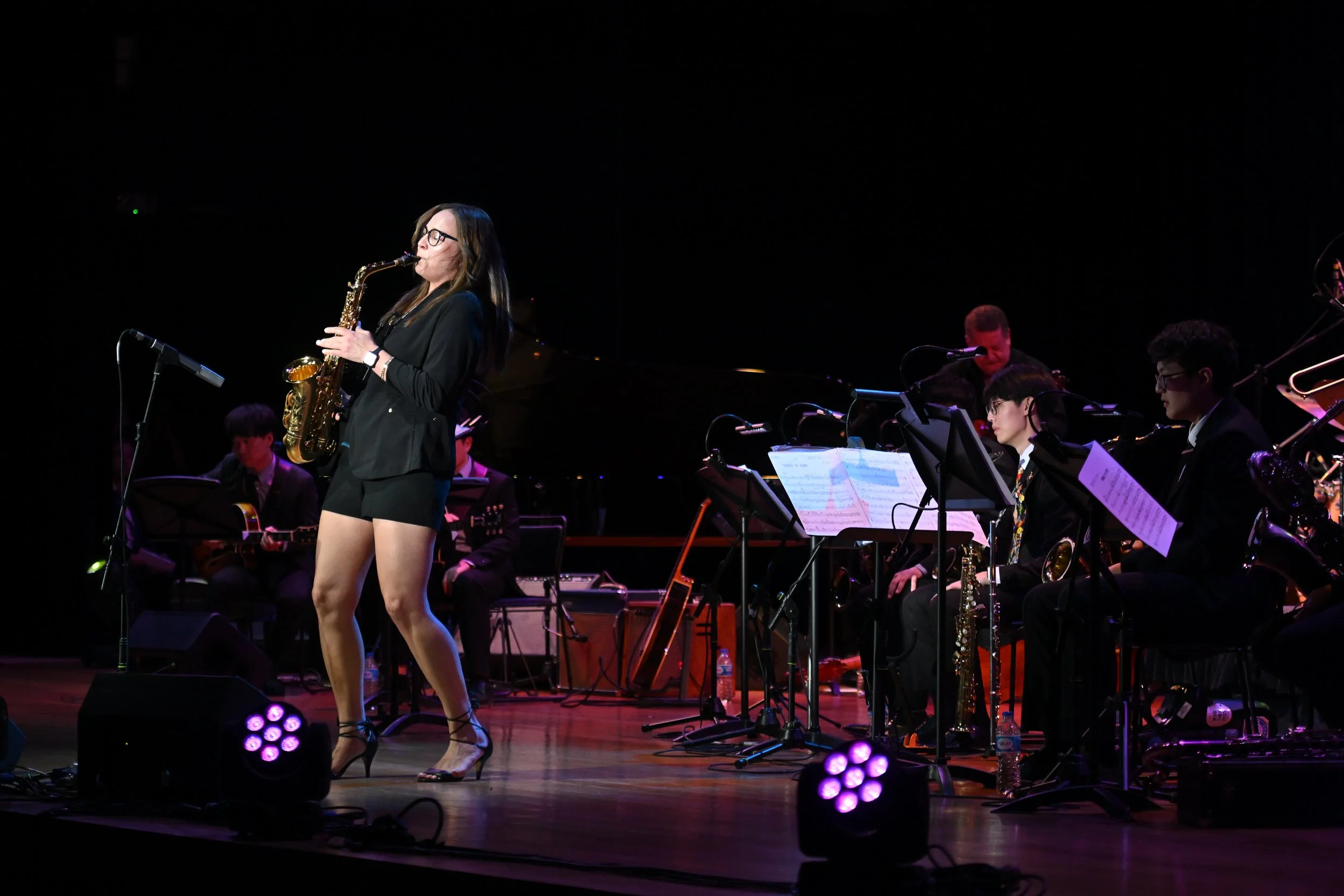
During Dizzying Heights, this was especially clear. Performances carried a sense of immediacy. Improvisation was foregrounded. Musicians responded visibly to one another, reminding audiences that jazz is built on listening as much as playing.
This feeling was amplified by the festival’s balance of venues and formats. Large moments existed, but they were always counterweighted by intimacy. Listeners could feel the music forming in the room rather than arriving fully formed.
That approach aligns with the festival’s broader identity, where live performance is inseparable from learning, collaboration, and community.
Where Mentorship Shaped the Music
Mentorship has always been central to the Lion City Jazz Festival, and Dizzying Heights made that philosophy audible.
Experienced artists did not simply perform for younger musicians. They performed with them. Onstage collaboration became a visible exchange of trust, experience, and curiosity. Audiences could hear guidance happening in real time through phrasing, space, and musical response.
This openness extended beyond the stage into educational sessions that helped listeners understand what they were hearing without flattening the art. Talks and workshops offered insight into how jazz musicians think, listen, and grow, deepening the emotional impact of the performances that followed:
Discover the jazz appreciation talk
A Festival That Let the Music Breathe
One of the most striking aspects of Dizzying Heights was its pacing. There was room to sit with a performance. Room to reflect. Room to return the next day with fresh ears. That breathing space is rare, and it is part of why the festival lingered in memory.
A Note on How Time Out Singapore Saw the Festival
Cultural moments gain depth when they are reflected back through thoughtful writing, and Dizzying Heights was no exception.
Time Out Singapore captured the essence of the Lion City Jazz Festival by focusing on its sense of purpose rather than treating it as just another event listing. Their piece highlighted the festival’s emphasis on craft, mentorship, and meaningful programming, framing it as an experience that rewards attention rather than demanding it.
This article serves as an external perspective that echoes what many audiences felt on the ground: that the festival was carefully curated, artist driven, and quietly confident in its identity. We encourage readers to explore their original coverage, which offers a complementary view of the festival’s impact and atmosphere:
Read Time Out Singapore’s feature on Dizzying Heights
This article is written in conversation with that piece, building on its observations while honouring the work of its writer.
Singapore’s Jazz Identity, Clearly Expressed
What Dizzying Heights ultimately revealed was how well the Lion City Jazz Festival reflects Singapore’s cultural character.
There is discipline without rigidity. Ambition without excess. Education without elitism. The festival’s Singaporean identity came through not in slogans, but in structure. In the way learning was valued. In the way collaboration was prioritised.
This grounding is reinforced by the festival’s relationship with the Jazz Association (Singapore), which anchors the event within a wider ecosystem of year round jazz education and community building:
Learn more about the Jazz Association of Singapore
Why Dizzying Heights Still Matters
Long after the final note, Dizzying Heights remains a reference point for what the Lion City Jazz Festival does best.
It showed that a festival does not need to be loud to be impactful. It does not need excess to create excitement. What it needs is clarity of purpose and respect for both artists and audiences.
By designing an experience that valued ascent over accumulation, Dizzying Heights captured the heart of jazz itself. Risk, joy, listening, and connection.
Continue Exploring the Festival Story
If Dizzying Heights sparked your curiosity, there is more to discover. The Lion City Jazz Festival continues to evolve, guided by the same principles of mentorship, collaboration, and thoughtful programming.
Explore the festival’s past and present highlights, follow its ongoing journey, and keep listening for what emerges when jazz is given the space to rise.